
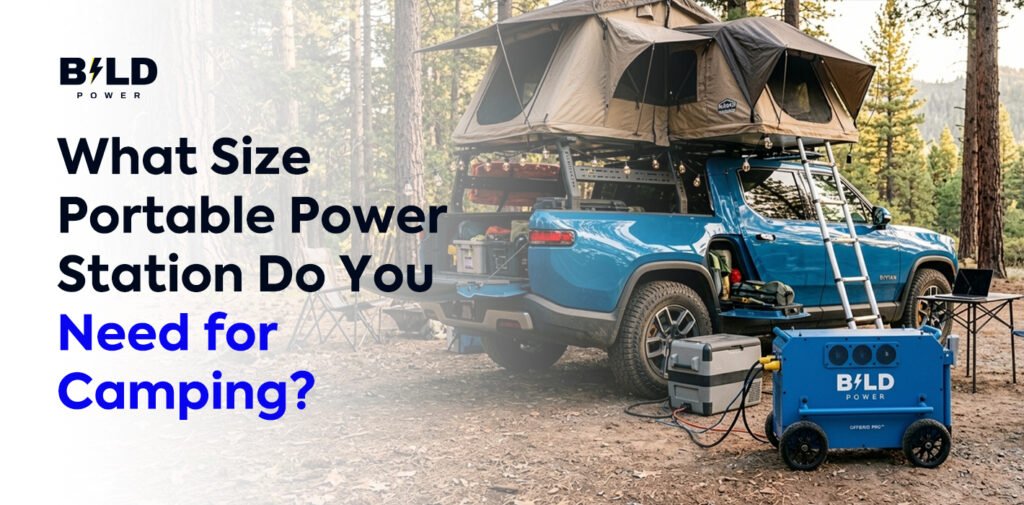
A camping trip can quickly become uncomfortable when your phone dies, your lights stop working, or your cooler runs out of power. While traditional camping often means disconnecting from electricity, many outdoor enthusiasts now rely on portable power solutions to stay prepared without giving up convenience.
Choosing the right portable power station for camping depends on what devices you plan to use, how long you will be away, and how much power your gear requires. A small power station may be enough for charging phones and lights, while larger units are better for extended trips with refrigerators, cameras, and other equipment.
This guide explains how to choose the right camping power station, calculate your energy needs, and find the best size for your next outdoor adventure.
What Is a Portable Power Station for Camping?
A portable power station is a rechargeable battery system that stores electricity and allows you to power devices while away from traditional outlets.
Unlike gas generators, portable power stations:
- Operate quietly
- Produce no fumes
- Require less maintenance
- Can often be charged through solar panels
- Are easy to transport
For campers, they provide reliable energy for essential devices while maintaining the outdoor experience.
A portable power station is commonly used for:
- Smartphones
- Tablets
- Cameras
- Camping lights
- Portable fans
- Small refrigerators
- GPS devices
- CPAP machines
- Cooking equipment (depending on capacity)
How Do You Determine the Right Size Portable Power Station?
The right size depends on two main factors:
- Power output (watts)
- Battery capacity (watt-hours)
Understanding both helps you avoid choosing a system that is either too small or unnecessarily large.
Understanding Watt-Hours (Wh)
Battery capacity is measured in watt-hours (Wh).
A watt-hour tells you how much energy the power station can store.
For example:
- A 300Wh power station can provide approximately 300 watts for one hour.
- A 1,000Wh power station can provide approximately 1,000 watts for one hour.
Actual runtime varies because devices consume different amounts of energy and power stations are not 100% efficient.
Understanding Power Output (Watts)
Watts determine which devices your portable power station can run.
Small electronics usually require less power:
| Device | Approximate Power Usage |
| Smartphone charger | 5–20W |
| LED camping light | 5–15W |
| Laptop | 40–100W |
| Camera charger | 10–30W |
| Portable fan | 10–50W |
| Small camping fridge | 40–80W |
Before buying a camping power station, check the watt requirements of your devices.
Portable Power Station Sizes for Different Camping Needs
Small Portable Power Stations (100Wh–300Wh)
Best for:
- Weekend camping
- Backpacking trips
- Basic electronics
A small power station can usually handle:
✓ Phone charging
✓ Smartwatch charging
✓ LED lights
✓ Small cameras
✓ GPS devices
These models are lightweight and easy to carry.
However, they are not designed for high-power appliances or multiple days away from electricity.
Medium Portable Power Stations (300Wh–700Wh)
Medium-sized units are popular among car campers and weekend travelers.
They can support:
- Multiple phones
- Laptops
- Cameras
- Camping lights
- Small fans
- Portable speakers
- Small coolers
A medium camping power station provides a good balance between portability and energy capacity.
For many casual campers, this size offers enough power without adding excessive weight.
Large Portable Power Stations (700Wh–1500Wh+)
Large power stations are designed for longer trips and higher energy needs.
They are useful for:
- Extended camping trips
- Off-grid camping
- Van camping
- RV use
- Running larger appliances
A larger unit can support:
- Portable refrigerators
- More powerful lighting systems
- Multiple devices
- Medical equipment
- Higher-demand electronics
The trade-off is increased weight and higher cost.
Choosing a Portable Power Station for Off-Grid Camping
Off-grid camping requires more planning because you may not have access to traditional electricity for several days.
When selecting an off-grid camping power station, consider:
Trip Duration
A one-night camping trip requires much less capacity than a week-long adventure.
Example:
A weekend camper may only need enough power for:
- Phones
- Lights
- Small electronics
A long-term off-grid camper may need:
- Refrigerator support
- Solar charging
- Larger battery capacity
Solar Charging Capability
Solar panels can extend your camping power supply.
A portable power station with solar compatibility allows you to recharge during daylight hours.
This is especially useful for:
- Remote camping locations
- Multi-day trips
- Off-grid travel
Device Priority
Not every device needs constant power.
Create a priority list:
Essential:
- Communication devices
- Lighting
- Medical equipment
Optional:
- Speakers
- Cameras
- Entertainment devices
This helps determine the battery capacity you actually need.
Common Mistakes When Buying a Camping Power Station
Choosing Based Only on Size
A larger battery does not always mean a better choice.
A heavy power station may be unnecessary if you only need basic charging.
Ignoring Device Starting Power
Some devices require more power when they start.
For example, refrigerators and some appliances may have a higher startup watt requirement.
Always check both:
- Running watts
- Starting watts
Forgetting Charging Options
A good portable power station should match your charging plan.
Consider:
- Wall charging before your trip
- Vehicle charging while traveling
- Solar charging outdoors
Not Considering Weight
For hiking and backpacking, weight matters.
A large power station may provide more energy but become difficult to transport.
Portable Power Station Size Guide
| Camping Style | Recommended Size |
| Backpacking | 100Wh–300Wh |
| Weekend camping | 300Wh–500Wh |
| Car camping | 500Wh–1000Wh |
| Off-grid camping | 1000Wh+ |
| RV camping | 1000Wh–2000Wh+ |
Frequently Asked Questions
What size portable power station do I need for camping?
Most casual campers need a 300Wh–700Wh portable power station. The ideal size depends on the devices you want to run and how many days you will be away.
Can a portable power station run a camping refrigerator?
Yes, many medium and large portable power stations can run camping refrigerators. Check the refrigerator’s wattage and the power station’s battery capacity before purchasing.
Is a portable power station better than a generator for camping?
Portable power stations are often preferred for camping because they are quiet, clean, and easy to use. Generators may provide more power but require fuel and produce noise.
Final Thoughts: Choosing the Right Camping Power Station
The best portable power station for camping depends on your adventure style and energy needs. For short trips focused on basic electronics, a small unit may be enough. For longer journeys, off-grid camping, or running appliances like refrigerators, a larger battery system provides more flexibility.
Before buying, make a list of your devices, calculate your daily energy use, and choose a power station that gives you enough capacity without carrying unnecessary weight. A properly sized camping power station helps you enjoy the outdoors while staying connected, prepared, and comfortable wherever your adventure takes you.