

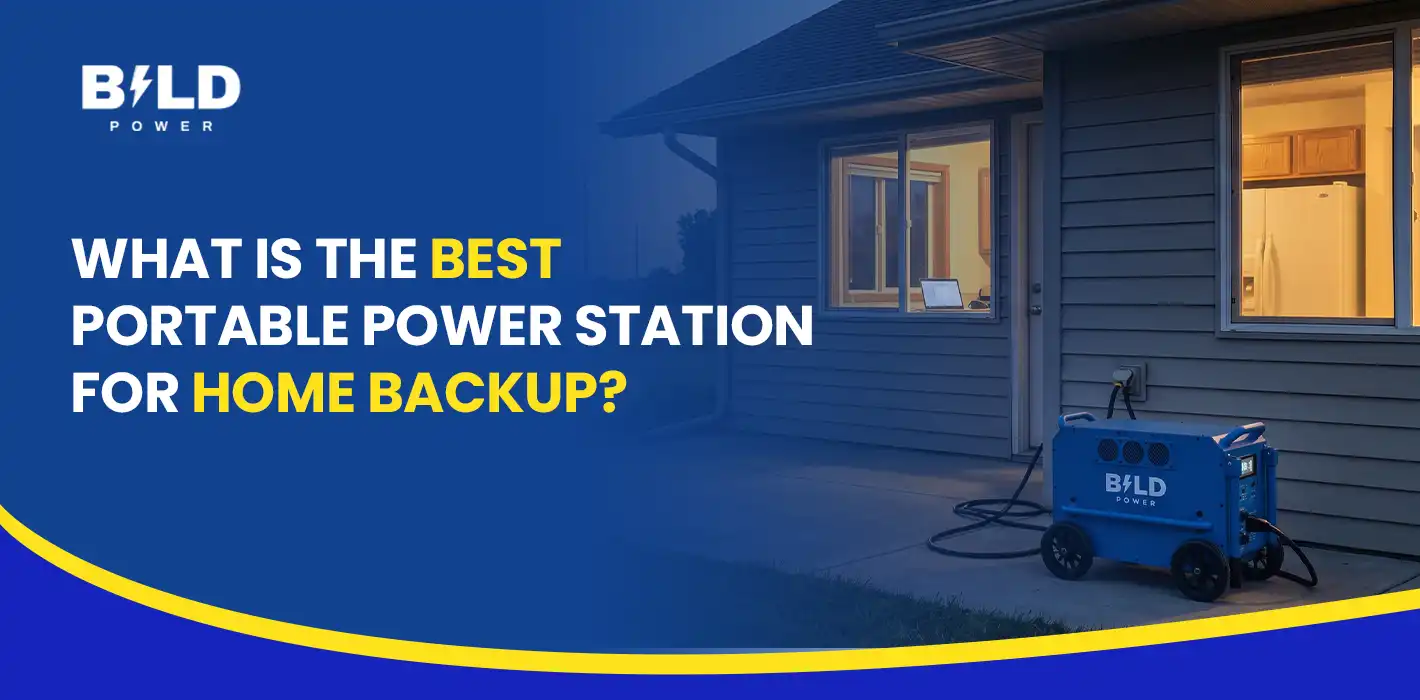
A good portable power station for domestic backup delivers high watt-hour capacity, strong continuous output, LiFePO4 battery chemistry, and solar charging compatibility. A quality unit runs important appliances including refrigerators, medical devices, and room lights for days without the need to refuel on short notice.
It is important to match battery capacity and output wattage to your household’s actual power needs as it determines which station genuinely protects your home during outages.
Knowing your household’s power needs before shopping helps you avoid choosing appliances that draw more power than a backup power station can provide. Your refrigerator, personal computer, medical equipment, fans, lights, and phone chargers each draw a specific wattage that you can find on the device label or in the manual. Adding these numbers together gives you a realistic baseline for the output your station needs to handle.
Battery capacity measured in watt-hours determines how long your appliances run between charges, and this number matters more than any other specification for home backup. A household running 400 watts of combined appliances needs 3,200 watt-hours for eight hours of coverage, and 9,600 watt-hours for a full day. Choosing a station with capacity that exceeds your calculated need gives you a safety buffer and room to add devices without running short.
Surge wattage also deserves equal attention because motors in refrigerators and air conditioners demand a burst of extra power during startup. Your station’s peak rating must exceed the highest startup demand among your appliances, or it trips its protection circuit the moment a compressor kicks on.
Outdoor home setups including garages, workshops, and covered patios face temperature swings and environmental conditions that stress power equipment in ways indoor use doesn’t. A station that delivers unstable voltage damages power tools, sensitive electronics, and outdoor lighting systems over time, even when the damage isn’t immediately obvious. Pure sine wave output matters here because it delivers clean, consistent power that matches what your wall outlets provide.
LiFePO4 batteries handle temperature variation better than older lithium-ion chemistry, maintaining more consistent performance across the range of conditions outdoor setups experience through seasonal changes. A station using this chemistry continues delivering reliable output during cold winter mornings and hot summer afternoons without the performance swings that affect cheaper battery types.
RV power needs differ from home backup because weight, size, and mobility all become important factors alongside capacity and output. A 300-pound station works fine in a garage but creates real challenges in an RV where floor space and carrying weight affect driving dynamics and storage options. Checking dimensions and weight before purchasing ensures your station fits your RV’s available space without creating other problems.
Air conditioners in RVs represent the most demanding load most travelers run, and your station needs enough surge capacity to handle compressor startup without tripping. A roof AC unit that pulls 1,500 watts while running might surge to 4,500 watts for a second during startup, which requires a station with peak capacity well above that number.
Solar charging compatibility becomes especially valuable for RV use because campgrounds with electrical hookups aren’t always available or convenient.
Solar charging works very well with modern portable power stations and turns a good backup solution into a self-sufficient one. Your panels convert sunlight into electricity that flows directly into your station’s battery, and this recharging happens continuously during daylight hours without any intervention from you. The OffGrid Pro accepts up to 3,700W of solar input, which means a good panel setup can fully recharge its 9,792Wh battery within a single sunny day.
It is important to know that solar compatibility specs matter because not all stations accept the same input voltage range or wattage from panels. A station that only accepts 500W of solar input charges far more slowly than one accepting 3,700W, even if both use the same panel setup. Matching your panels to your station’s input specifications maximizes charging speed and extends how long your backup power lasts during multi-day outages.
BILD Power builds stations around LiFePO4 battery chemistry rated for 6,000-plus charge cycles, which outlasts the 500 to 1,000 cycles typical of older lithium-ion designs by a wide margin. This longevity means your investment stays useful for years rather than degrading noticeably after a few hundred charges. Long cycle life translates directly into lower cost over time compared to cheaper stations that need replacement far sooner.
Pure sine wave output across BILD Power’s OffGrid Pro stations protects sensitive equipment including medical devices, computers, and modern appliances from the power quality issues that modified sine wave inverters create. The combination of quality components, honest specifications, and reliable support separates BILD Power from brands that prioritize low price over actual performance.
BILD Power is a trusted name for families who need dependable home backup without compromises. The OffGrid Pro is one of the best portable power stations for your house backup, as it delivers 9,792Wh of LiFePO4 capacity, 7,200W output, and 3,700W solar input compatibility, making it one of the most capable and reliable options available for whole-home backup power today.