

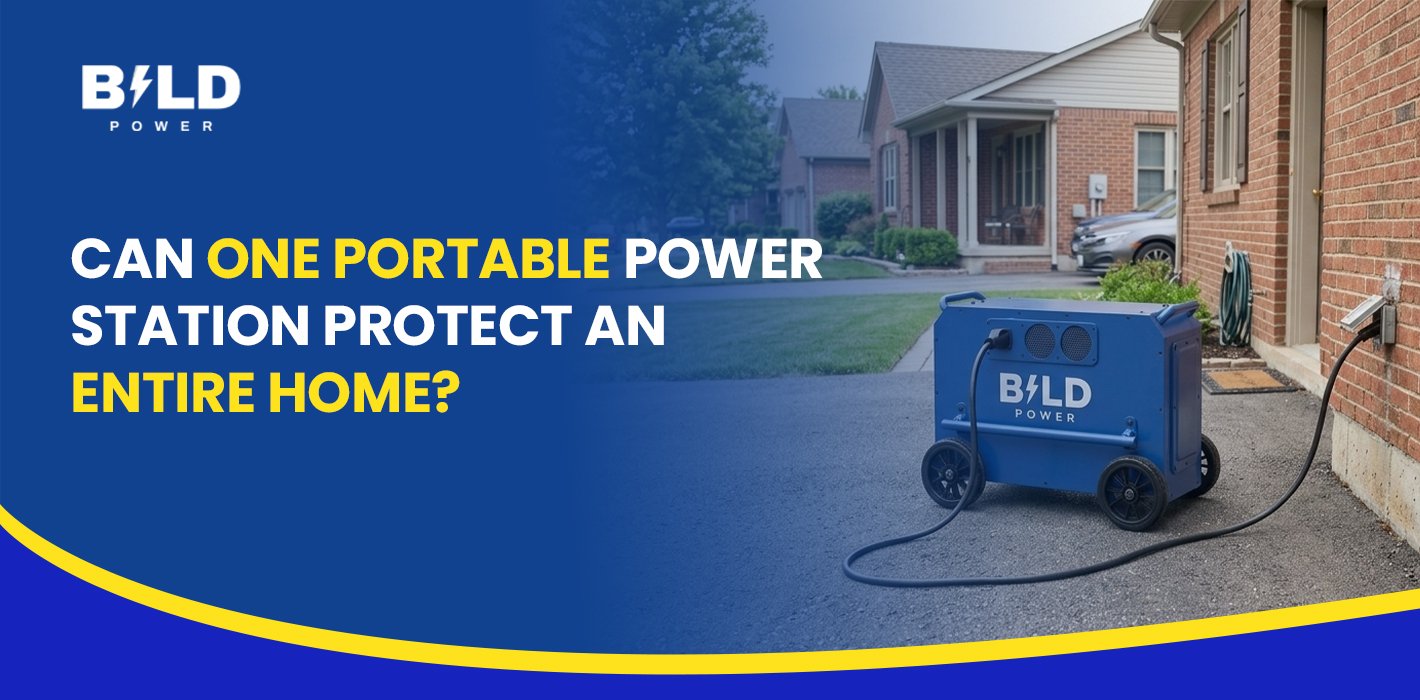
A single portable power station can protect an entire home during outages, but only if it matches your household’s actual power needs. The right unit keeps essential appliances running, including refrigerators, medical devices, lights, and fans, simultaneously. High-capacity stations with strong output ratings and solar charging capability handle most homes comfortably, while smaller units work better for targeted essential coverage only.
Watt-hours measure how much total energy your power station stores, and this number determines how long your home stays powered more than anything else. A station rated at 500Wh runs out fast under real household loads, while one with 9,000Wh or more keeps essential appliances going for days without recharging.
Buying enough watt-hours for your situation separates a power station that genuinely protects your home from one that barely covers a few hours. The math works simply once you know your appliances’ wattage. A refrigerator drawing 200 watts, two fans at 50 watts each, and phone chargers pulling 20 watts together use 320 watts total.
Mathematically, a 3,200Wh station runs this combination for ten hours, while a 9,792Wh unit like the OffGrid Pro handles it for thirty hours straight before needing any recharge. Choosing based on watt-hours rather than price alone means your investment actually protects your family.
Peak power numbers tell you how much surge capacity your station handles during brief startup moments, and this matters enormously for home protection. Refrigerators, air conditioners, and well pumps all need two to three times their normal running wattage for a second or two when their motors first start. A station that handles running watts but trips on surge demands fails at the worst possible moment during a real outage.
Your station’s peak wattage rating must comfortably exceed the highest surge demand among your appliances. A refrigerator that runs on 200 watts might surge to 600 watts on startup, and a window AC pulling 1,000 watts might spike to 3,000 watts. The OffGrid Pro delivers 7,200W of output with strong surge handling, which covers the startup demands of most residential appliances without tripping protection circuits or shutting down unexpectedly.
Depth of discharge refers to how much of your battery capacity you actually use before recharging, and this affects both runtime and long-term battery health. Most battery systems perform best and last longest when you avoid draining them completely to zero before recharging. Keeping discharge above 20 percent extends battery lifespan significantly compared to running your unit down to empty every time.
LiFePO4 batteries handle deep discharge better than older lithium-ion chemistry, which makes them a better choice for home backup applications where outages might force extended use. These batteries also maintain more consistent voltage throughout their discharge cycle, which means your appliances receive stable power even when the battery drops to lower charge levels.
A clear understanding of which appliances your station handles prevents overload situations that trip protection circuits during critical moments. Essential appliances, including refrigerators, medical devices, lights, fans, and communication devices, work well with high-capacity stations and represent the smart priority list during outages. High-draw appliances like electric water heaters, clothes dryers, and typical whole-house central air conditioning systems often exceed what portable stations deliver continuously.
Your station’s continuous output rating tells you the ceiling for simultaneous appliance operation. A unit rated at 3,600W continuously handles a refrigerator, window AC unit, medical equipment, and several other devices running together without difficulty. Planning your priority appliance list before an outage means you know exactly what to plug in first and what to skip, rather than discovering limitations when you need power most.
Proper configuration means connecting your power station to appliances thoughtfully rather than plugging everything in at once. To manage initial surge loads safely, plug in and start your highest-draw appliance first, such as a refrigerator, before adding lower-wattage electronics like fans or lights. Medical devices connect next because health needs take priority over convenience. Lights, fans, and communication devices fill the remaining capacity without pushing your station beyond comfortable operating levels.
Unplugging non-essential devices before an outage starts protects your backup capacity for what truly matters. A power strip with individual switches helps you control which items draw power without physically disconnecting cords in the dark.
Transfer switch installation by a licensed electrician lets your power station connect directly to your home’s electrical panel rather than requiring extension cords and manual plug-ins. This configuration means your hardwired appliances receive backup power safely through your home’s existing wiring the moment an outage begins.
BILD Power builds stations designed to handle real household protection demands without compromise. The OffGrid Pro delivers 9,792Wh of LiFePO4 capacity, 7,200W output, and accepts up to 3,700W of solar input, making it one of the most capable options available for families who want genuine whole-home backup from a single portable unit.