

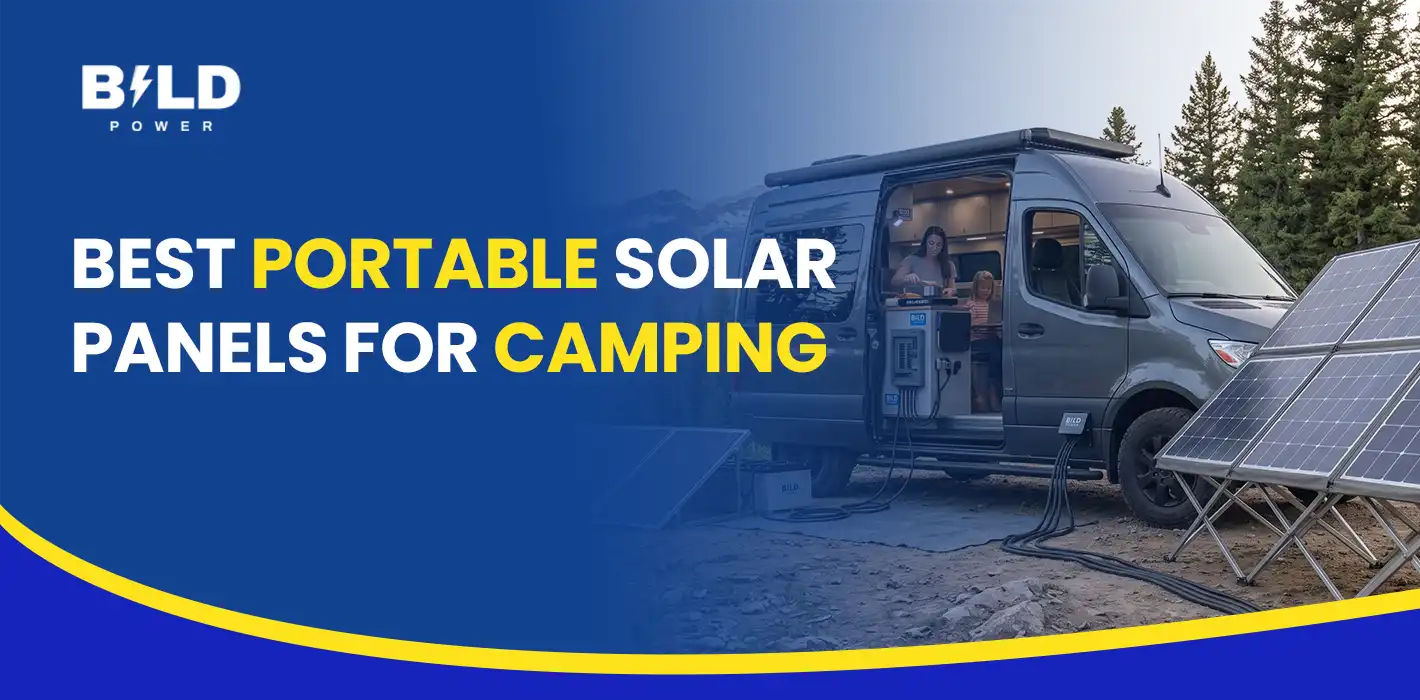
Mobile solar panels for camping fold up compactly, weigh under 20 pounds, and produce enough wattage to recharge a portable power station or keep electronic gadgets running throughout your trip.
Monocrystalline panels deliver the most efficiency in the smallest size, making them the top choice for campers who want reliable power without hauling heavy equipment across campsites or trails.
Campgrounds don’t always offer electrical hookups, and battery-powered devices run out faster than expected on longer trips. A portable solar panel solves this by generating free electricity from sunlight, keeping your power station charged throughout the day. This means your phones, lights, fans, and camp appliances remain powered up without cutting your trip short.
Monocrystalline panels convert more sunlight into electricity per square inch than older polycrystalline designs, which matters when you’re working with limited panel space. Higher efficiency means you get more power from a smaller, lighter panel, and it works to your advantage when you’re packing a campsite or hiking to a remote spot.
A panel that folds into a briefcase-style case with a carrying handle travels easily between your car and campsite. Most quality camping panels weigh between 9 and 20 pounds depending on wattage, and foldable designs protect the cells during transport. A kickstand or integrated stand lets you angle the panel toward the sun without propping it against gear.
Outdoor conditions include dust, humidity, rain, and temperature swings that panels must handle without losing performance or developing faults. An IP65 or higher weather resistance rating means the panel handles splashing rain and morning dew without damage. Durable junction boxes and reinforced cable connections extend panel life beyond a single camping season.
Phone charging, LED lanterns, and a small speaker draw very little power combined, and a 100-watt panel handles these needs comfortably on sunny days. A compact 100W panel weighs around 9 to 12 pounds and fits in most car trunks alongside the rest of your gear without taking up much room.
Running a portable fridge, fan, and multiple device chargers simultaneously requires more panel capacity to keep your battery station topped up. A 200-watt panel or two 100-watt panels connected together provide enough daily input for comfortable camp living without worrying about running low by evening.
Longer trips with larger power needs benefit from 400 watts or more of solar input, especially when you want to run cooking appliances or power tools alongside everyday devices. Connecting multiple panels in parallel through a compatible power station increases total daily energy harvest and keeps even large batteries well charged.
Most portable solar panels connect to a power station through an MC4 connector or a compatible DC cable that plugs directly into the station’s solar input port. Your power station’s solar input specifications tell you the maximum voltage and wattage it accepts, and staying within those limits ensures safe, efficient charging. The OffGrid Pro accepts up to 3,700W of solar input across a wide voltage range, which makes it compatible with most quality portable panel setups.
Tempered glass panels resist scratches and minor impacts better than plastic-covered cells, though glass adds some weight. ETFE-coated panels strike a balance between durability and light weight, making them popular choices for camping where portability matters. The cell material under the coating determines actual power output, and monocrystalline cells consistently outperform other options.
Short or poorly made cables create resistance that reduces charging efficiency between your panel and power station. Thick, well-insulated cables with secure connectors deliver more of your panel’s output to the battery rather than losing it as heat. Panels that include multiple adapter cables work with more power stations without requiring extra purchases.
Panel angle and direction dramatically affect how much electricity your setup produces during the day. A panel aimed directly at the sun produces its rated wattage, while one lying flat on the ground in partial shade might deliver a fraction of that. Moving your panel once or twice during the day to track the sun’s position meaningfully increases total energy harvest over a full camping day.
BILD Power is a trusted name for campers who want reliable off-grid power without complexity. The OffGrid Pro pairs beautifully with quality portable solar panels, accepting up to 3,700W of solar input to keep its 9,792Wh battery charged through multi-day camping trips wherever the sun shines.