

When the power goes out, having the right backup solution can make all the difference. Today, there are a variety of backup power options available in the market, such as UPS, portable power stations, solar panels, and gasoline generators. However, each backup power solution is suited to different situations and needs.
Portable power stations are a popular choice these days because of their quiet operation. These stations are also safe to use indoors as they don’t release harmful fumes. On the other hand, gas generators have a longer runtime, but they need fuel and outdoor space to safely operate. Families find portable power stations for these reasons to be a more convenient choice.
A home backup power system comes in handy for hurricane-related outages and also when the power goes out due to maintenance. Some of these systems restore power instantly, while others require you to plug in your devices manually. They all come in different power capacities.
Good preparation means having the right equipment before you need it. Backup power solutions for homes are quick to sell out when emergency outages happen. Prices also go up, so it’s better to have everything set up in advance. Let’s break down the most common backup power options and how they work in real life.
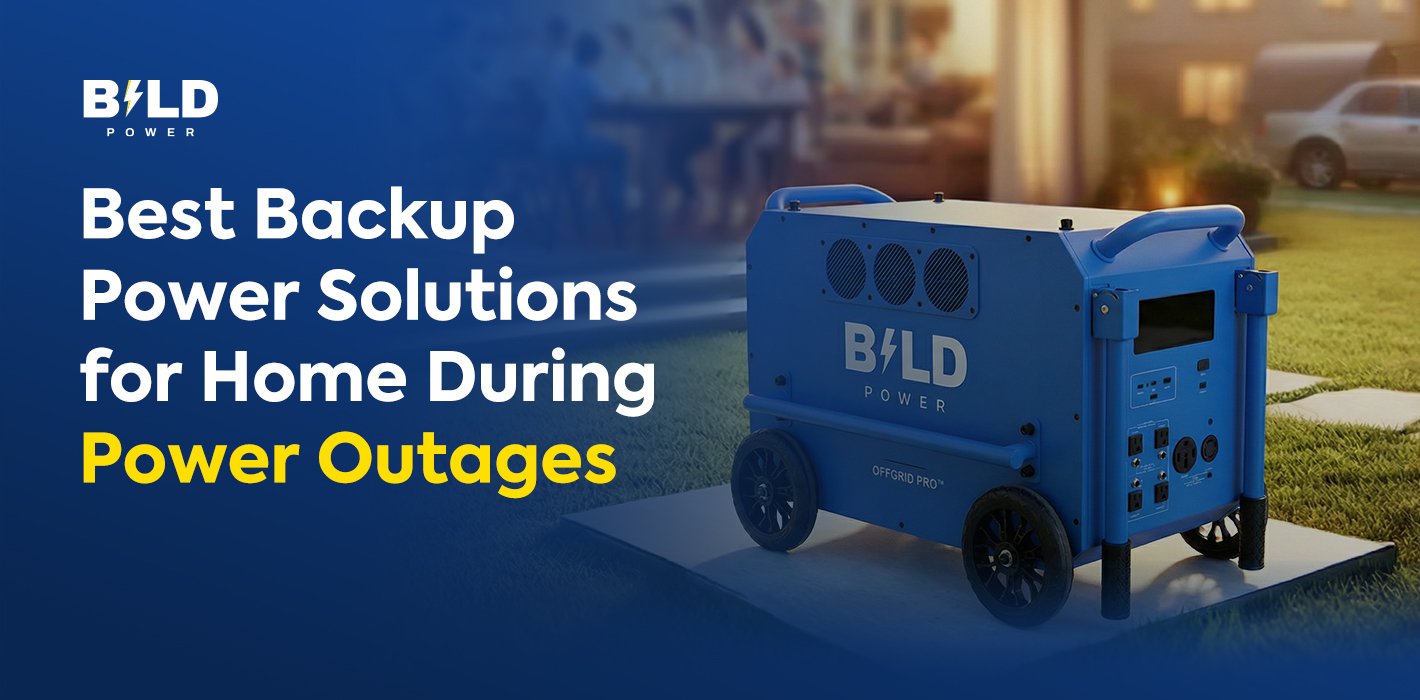
Portable power stations like the OGP Pro are like giant batteries with power outlets. You plug your devices directly into them. They work indoors without fumes or noise, as no fuel is needed for their operation. Most units have regular wall outlets, USB ports, and sometimes special outlets for RVs or heavy equipment. You charge them from a wall outlet or solar panels, but their battery capacity determines how long they last.
Solar panels need direct sunlight to work best. They work with portable power stations or when connected to your home’s electrical system. Most portable panels fold up for easy storage. Permanent roof panels cost more but work automatically, as you don’t have to set them up each time.
Some power tool brands now make adapters that turn the tool batteries into small power sources. The adapters normally include USB ports and small AC outlets. These work great for charging phones or tablets and turning on lights.
Gas generators run on gasoline or propane while producing noise and fumes, which means they must operate outdoors. These generators need regular maintenance, and a dedicated space is needed in an open garage or lawn so that carbon monoxide fumes are safely exhausted. Engine oil changes and spark plug replacements are also important.
Small portable batteries for phones and tablets come in handy. They’re small enough to fit in a pocket or bag and have a USB port for recharging. A typical power bank is good enough to charge a smartphone two or three times. Still, it is not meant to power all of your home appliances. They’re more of a personal emergency backup for charging phones to stay in touch with friends and family.
UPS stands for uninterruptible power supply, as these units protect computers and electronics from sudden power loss. They kick in instantly when the power goes out. Most UPS units only last 10 to 30 minutes, which gives you enough time to save your work and shut down properly or run basic low-power appliances briefly. Some larger UPS models run longer but cost more.
Your refrigerator should be the priority in an outage, as food spoils fast, especially in summer. A fridge uses 100 to 800 watts, depending on size and age. Medical equipment like CPAP machines comes next if anyone needs it.
LED bulbs use very little power, which means that you can keep a few essential lights running with very little power. You can even light up your whole house without draining your battery backup quickly. Heating and cooling appliances consume the most power, so avoid using them unless someone’s health depends on temperature control.
The best portable power station depends on which appliances you plan to run. Small power stations with 500 to 1,000Wh work best for phones, lights, and laptops. Mid-size units go above 2,000 to 5,000Wh range and can easily manage fridges or small AC units. Large stations with 7,000Wh or more can power the majority of a standard household load.
BILD Power offers reliable home backup solutions that families trust during emergencies. The OffGrid Pro of BILD Power delivers 9,792Wh of capacity with 3,600W continuous output. It also accepts up to 3,700W of solar input with the ability to recharge quickly when the sun comes out.