

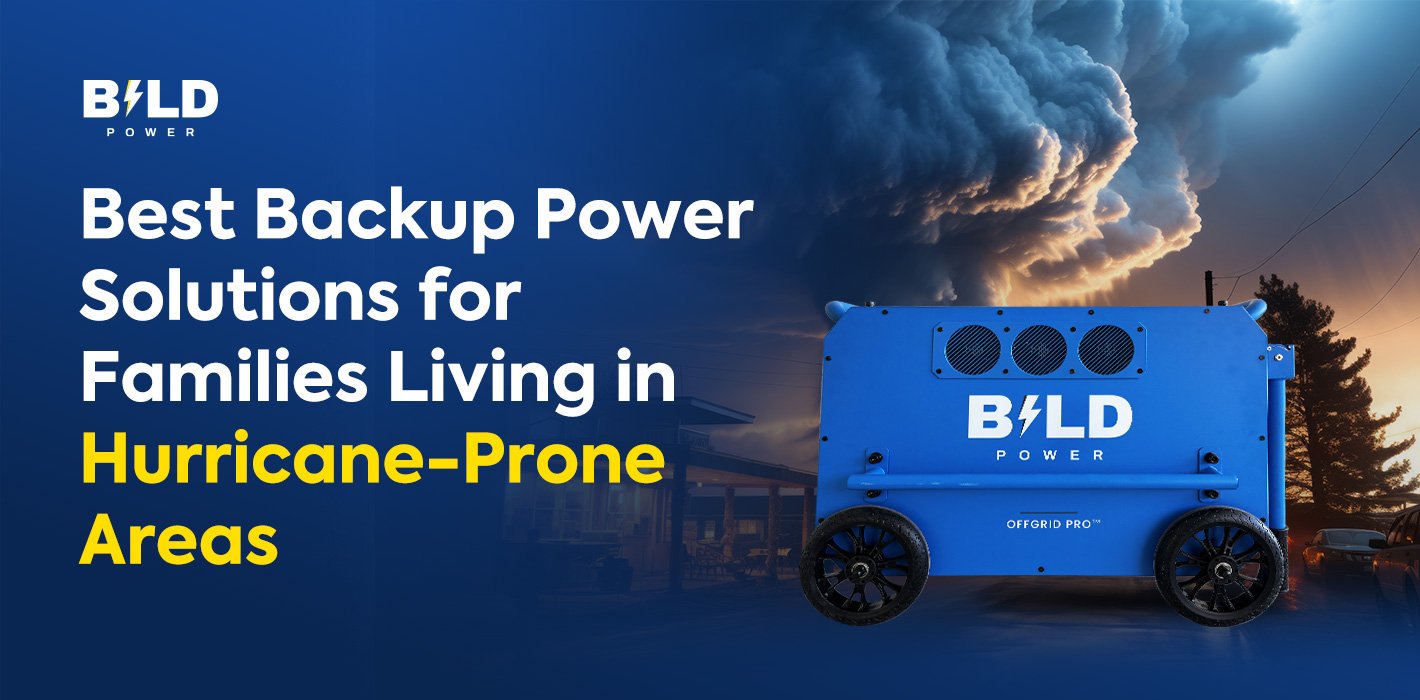
Families always need backup power solutions for hurricanes that work indoors safely, last multiple days, and keep critical appliances running without fuel dependency. Portable power stations like BILD Power OffGrid Pro, paired with solar panels, come forward as the most reliable option because they operate silently, require no gasoline, and recharge using sunlight even after a storm passes and skies begin to clear.
Good preparation starts well before hurricane season, not when a storm warning appears on the news. Stores sell out of generators, batteries, and power stations within hours of a forecast, and prices spike dramatically when demand surges. Getting your backup system set up in the spring gives you time to test everything and fix problems without feeling rushed or under pressure.
Your first step is knowing your household’s actual power needs before buying anything. A family with a newborn needs refrigerated formula and a working breast pump. A grandparent might need a CPAP machine or refrigerated medications. An adult child working remotely needs the internet and a charged laptop. These specific needs determine what size and type of backup power makes sense for your situation.
Testing your backup power solutions for hurricanes before they arrive matters more than most families realize. You can trial-run essential appliances from your power station on a regular weekend afternoon to see if capacity meets your needs. This hands-on practice means no one fumbles with unfamiliar equipment in the dark during a stressful storm situation.
Your total power needs depend on which appliances you plan to run and for how long. A refrigerator uses roughly 150 to 400 watts, depending on age and size, and it cycles on and off throughout the day. A CPAP machine draws about 30 to 60 watts overnight. LED lights throughout your home add another 50 to 100 watts total.
Most families find that a system with at least 3,000 watt-hours covers essential needs for 24 hours comfortably. A larger capacity, around 9,000 to 10,000 watt-hours, handles three to four days of essential operation without any recharging. This matters because major hurricanes routinely leave coastal areas without power for a week or longer.
Surge wattage deserves attention because internal systems in refrigerators, air conditioners, and well pumps often need two to three times their normal power during startup.
Portable power stations work exceptionally well for hurricanes, specifically because they eliminate the biggest problems gas generators create. You run them safely inside your home without carbon monoxide risks, and they operate silently so children sleep and elderly family members rest comfortably through the night.
Solar charging changes the equation completely for extended outages because fuel shortages become a serious problem after major hurricanes. Gas stations require electricity to pump fuel, and supply trucks can’t reach storm-damaged areas quickly. The OffGrid Pro accepts up to 3,700W of solar input, meaning a few good solar panels can fully recharge its large battery within a single sunny day after the storm passes.
The instant-on capability proves valuable during the chaos of losing power. No starter cord, no warm-up time, and no running outside in dangerous conditions to start a generator. You plug your essential devices into the power station, and everything continues working exactly as it did before the outage began.
The OffGrid Pro with 9,792Wh of capacity handles days of essential operation, and its 3,600W continuous output runs refrigerators, medical equipment, and multiple devices simultaneously. It is a safe emergency power solution for homes.
Water storage ranks first because municipal systems sometimes lose pressure or become contaminated after major storms. One gallon per person per day covers drinking and basic hygiene needs, and a family of four needs at least 12 gallons for a three-day minimum. Larger containers or multiple cases of bottled water provide a practical starting point.
Non-perishable food covers nutrition needs without requiring refrigeration or cooking. Canned goods, peanut butter, crackers, dried fruits, and nuts provide reasonable nutrition and store well for months. A manual can opener becomes essential because electric versions won’t work without power.
First aid supplies handle minor injuries that happen more often during and after storms. Bandages, antibiotic ointment, pain relievers, and a full supply of prescription medications should stay stocked and accessible. Pharmacies close during widespread emergencies, and supply chains are disrupted quickly after major hurricanes.
Battery-powered or hand-crank weather radios deliver emergency alerts and updates when phone batteries run low or cell towers become overwhelmed. A NOAA weather radio provides official updates about storm progress, road closures, and evacuation orders without depending on internet connectivity.
Your refrigerator deserves priority because food and medication safety depend on it. Insulin and many other medications lose effectiveness at room temperature within hours, and a fridge full of groceries represents hundreds of dollars worth replacing. Keeping the refrigerator running protects both health and finances during extended outages.
Medical equipment comes immediately after refrigeration because devices like oxygen concentrators and CPAP machines keep people alive and well overnight. Someone who skips their CPAP machine faces dangerous oxygen drops during sleep, and people on home oxygen therapy cannot safely go without their equipment. Smart backup power solutions for hurricanes eliminate the risk entirely.
Lighting matters for safety because falls and injuries happen more often during nighttime outages. LED bulbs use minimal power and provide enough light to move safely through your home at night. A few strategically placed lights throughout your house only draw 50 to 100 watts total, making them easy to run alongside more power-demanding appliances.